
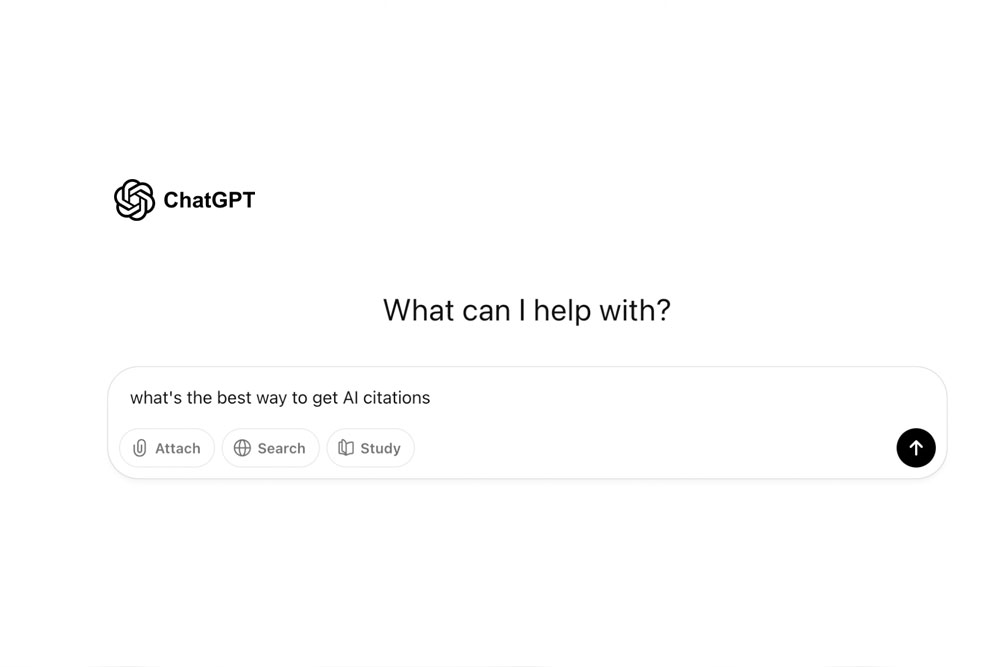
Picture this: A user asks ChatGPT or Google Gemini a question. The AI searches its knowledge, gathers sources, and spits back an answer, sometimes along with links (citations) to the web pages it used.
According to recent data, being cited by AI (i.e., your webpage being one of those links) is becoming a major signal of visibility.
A “citation” in this context means a clickable link to your page that an AI engine used as a basis for its answer. Here’s why that matters:
- Traditional SEO is still alive, but AI-powered search (answer engines, generative search) is shifting the game.
- If you get cited by AI, you’re effectively being presented as a trusted source, and that drives both brand authority and traffic.
- You may not always rank #1 via traditional SERPs, but citations open up another channel of reach.
So… if you’re serious about staying ahead in SEO in 2025 + , you need to treat “citations” like the new link-building frontier. Let’s dig into how.
1. What Exactly Counts as an “AI SEO Citation”?
To make sure we’re aligned, here are definitions we’ll use:
- Mention = your brand/product/website is referenced (name only) without necessarily linking.
- Citation = a link to your webpage used by an AI engine in generating an answer.
- GEO/AEO = Generative Engine Optimization / Answer Engine Optimization: optimizing content so you’re found and cited by AI-driven systems rather than just Google’s traditional ranking.
Why this matters: Because only mentions don’t guarantee clicks or traffic, citations do. And because AI-search often prioritizes structured, high-authority content for citations, you want to be eligible.
2. Why Citations Matter (in 2025 and Beyond)
2.1 Trust & Authority
AI engines favour sources that are clearly authoritative, structured, and reliable. By achieving citations you signal to both humans and machines that your content is credible.
2.2 Visibility in New Search Channels
If more traffic is coming via AI-answer engines (rather than clicking traditional SERP listings), citations become a form of “organic signal” in that space.
2.3 Quality over Quantity
Because AI engines may provide full answers (zero-click), when a user does click your page via citation, they often have higher intent. That means better engagement and more meaningful results for you.
2.4 Future-proofing SEO
Traditional ranking tactics still work. But as AI search evolves, being left behind in the “citation game” could mean losing visibility even if you’ve got backlinks. Contents optimized for citations gain a strategic edge.
3. The 10 Pillars of Citation-Worthy Content
Here’s a breakdown of what tends to make AI engines cite your page, or conversely, bypass it.
- Semantic relevance & intent alignment
Your content must answer the actual question (not just match keywords). AI cares about meaning. - Depth & topical authority
Pages that are thorough, cover many angles, include data or examples, and demonstrate subject-matter authority tend to be cited. - Clear structure & parseability
Use headings, bullet-points, numbered lists, tables. Make it easy for machines and humans to parse. - Trust signals & credibility
Author bios, citations to primary sources, accurate data all help. AI systems prefer verifiable statements. - Freshness & updates
Especially when the topic is dynamic, being current counts. AI engines like fresh sources. - Technical accessibility
Structured data/schema, crawlability, correct metadata. If your page can’t be parsed, you lose out. - Entity signals & brand presence
If your brand is recognized as an entity in the corpus, that helps your page get cited. Think Wikipedia, mentions in niche press - Unique or proprietary content
Original research, data, frameworks, case studies. Content that offers something others don’t. AI engines often pick novel high-quality content. - Internal linking & topical hubs
A well-organized site with topic clusters and strong internal links helps AI understand your niche authority. - Link-out quality & citation ecosystem
Linking out to trusted sources, being linked from other authoritative pages. You become part of the web-of-trusted information.
4. Step-by-Step: How to Audit for Citation Readiness
Let’s walk through what you should check on your site to ensure you’re ready to be cited.
Step A: Identify Your Candidate Pages
Target pages that:
- Are already ranking moderately well or have good traffic
- Cover topics with information‐seeking queries (e.g., “what is X”, “how to do Y”)
- Are deeper than just a superficial blog post
Step B: Audit Content Structure & Depth
- Does the page have a clear H1 question or headline?
- Are there H2/H3 sub-headings addressing sub-questions?
- Are there lists, tables, or bullet points for easy parsing?
- Do you cite sources, include data or original insight?
Step C: Technical & Schema Check
- Is the page crawl-friendly (no blocking robots, proper canonical tags, etc.)?
- Is schema implemented (FAQPage, HowTo, Article, etc.)?
- Are meta titles & descriptions optimized?
Step D: Brand/Entity & Link Ecosystem
- Is the brand name properly used and recognizable?
- Do other authoritative sites link to you?
- Do you link out to credible sources to validate your statements?
Step E: Freshness & Monitoring
- When was the content last updated?
- Does it reflect latest data, trends, or insights?
- Set alerts for changes in your space (so you can refresh proactively).
Step F: Tracking Citations
- Use tools like ahrefs / writesonic / brand radar to monitor when your pages get mentioned or cited in AI engines. Writesonic+1
- Check manually: ask ChatGPT, Perplexity or other AI tools the question your content answers – see if your page appears.
5. Practical Content Creation Guidelines for Citations
When creating new pages with the intention of being cited, follow this blueprint:
5.1 Lead with the answer
The first few lines should respond directly to the query. Example:
“A citation in AI search is a clickable link to a webpage an AI engine used as a source when generating its answer.”
Clear, direct, defined.
5.2 Use “Answer-first” structure
After your direct answer, expand into explanation, examples, best practices. This helps both human readers and AI bots.
5.3 Use heading questions
H2/H3 headings that mirror what a user might ask (“What is an AI SEO citation?”, “How do AI engines choose citations?”, “How can I increase citation chances?”) make your content more aligned with AI retrieval criteria.
5.4 Include data, case studies, or unique insights
Original content – survey results, internal experiments, new frameworks – increases your chances of being selected as a citation.
5.5 Apply schema markup
If you have a FAQ section, wrap it with FAQPage schema. For “how to” instructions, use HowTo schema. These make your content more machine-readable and citation-friendly.
5.6 Optimize for machine parseability
- Use short paragraphs (2-4 sentences)
- Use lists/tables where applicable
- Include bold headings
- Avoid large blocks of text that machines might skip
5.7 Use entity linking and brand clarity
Ensure your brand/subject appears clearly, consistently, and is recognized as an entity. Consider creating or updating a Wikipedia page if relevant. AI systems often draw on broader knowledge graphs.
5.8 Promote your content and build authority
Once published, promote it via social, industry publications, get mentions/links. The more your content is recognized externally, the stronger the citation signal.
6. Citation Strategies: How to Actively Get Cited
Here are actionable tactics to build your citation profile:
6.1 Create pillar content & topical clusters
Build a strong core page (pillar) with supporting pages (clusters). This creates internal strength and signals authority. Over time AI will see your brand/domain as a knowledge hub.
6.2 Publish original research or frameworks
Survey data, proprietary methodology, case studies – content no one else has. When others reference your work, AI may pick you up as source.
6.3 Get featured in industry press & directories
Third-party mentions boost your entity authority. Aim for coverage in authoritative publications. These help both backlinks and entity signals.
6.4 Make content shareable & link-able
Infographics, charts, downloadable resources encourage others to link to or cite your content, which in turn helps AI citation potential.
6.5 Update content regularly
Set a schedule to revisit high-potential pages: refresh data, update insights, ensure no outdated info. Freshness is a plus.
6.6 Monitor what AI is citing in your niche
Use tools to see which pages are being cited by AI engines. Reverse-engineer what those pages do, then model your content accordingly. ASTRALCOM+1
6.7 Use structured data and alternate formats
Adding a table comparison or FAQ section with schema can make your content more likely to be referenced by AI.
6.8 Ensure technical excellence
Fast load speed, mobile-friendly, proper canonicalization. Technical issues can hamper being cited even if content is great.
7. Pitfalls & Mistakes to Avoid
- Relying only on superficial content (thin, generic posts) – not citation-worthy.
- Neglecting entity/brand signals – if your brand isn’t recognized, harder to get cited.
- Ignoring technical/markup issues – great content still needs to be accessible.
- Ignoring freshness – stale stats or outdated content reduce value.
- Assuming traditional SEO = citation success – being ranked #1 does not guarantee citations from AI.
- Not tracking AI citation signals – if you can’t monitor, you can’t optimize.
8. Case Study Snapshot
Here’s a fictionalised (but realistic) case:
Company: SaaS brand BuildFlow.
Goal: Become a cited source for “what is agile workflow automation”.
Actions Taken:
- Published a 3,000-word guide: “What is Agile Workflow Automation? The Complete Guide (2025)”.
- Included proprietary survey data: 500 managers rated workflow tools.
- Structured with H2 questions, FAQ section, tables comparing top tools.
- Added schema: HowTo, FAQPage.
- Promoted via LinkedIn, guest posts in industry blogs, got coverage in Medium.
- Monitored AI-citation platforms and found the BuildFlow guide begin appearing as link in AI responses for “workflow automation tools” queries within 8 weeks.
Outcome:
- Increased referral traffic via AI citations.
- Improved brand recognition in AI answer-engine context.
- Traditional SEO ranking improved due to increased inbound links from guest posts and syndication.
9. Measuring & Tracking Success
- Citation tracking: Use tools (Writesonic, competitor monitoring) to check when and where your pages are cited in AI.
- Traffic quality: Monitor referral traffic from citation pages, look at engagement (time on page, bounce rate).
- Brand entity mentions: Use Google Search Console + brand-monitoring tools to track mentions and links.
- SERP performance: Compare traditional ranking and AI-citation performance to spot gaps.
- Update cadence & refresh metrics: Note how often content is updated and correlate with citation increases.
10. The Future of Citations & AI SEO
AI search engines are evolving fast. Some trends to watch:
- More real-time citations as LLMs integrate live web data.
- Increased emphasis on entity graphs and brand-level visibility.
- Higher importance of structured data and machine-understandable content.
- Possibly fewer clicks (zero-click results) – meaning citations may become more important than direct ranking.
- Integration across voice assistants, IoT, and conversational platforms – if your content is citation-friendly, you’re ahead.
Wrapping Up
If you’ve been pushing traditional link-based SEO and thinking that’s enough, think again. The future is here. Citations in AI-driven search matter. They give you access to a new layer of visibility.
Here are the key takeaways:
- Define and audit the pages you want cited.
- Build content that aligns with semantic intent, authority, structure, and machine-readability.
- Promote your brand as an entity, publish unique content, track citations, refresh regularly.
- Monitor AI-citation metrics alongside traditional SEO metrics.
- Stay agile – AI search is evolving, and your citation strategy needs to evolve with it.
Start with one high-potential page this week. Optimize it for citation readiness. Track, refine, and scale from there. Four weeks later you’ll know if you’re on the right path.
Here’s to becoming the source that AI chooses.
Let’s Rank it. 🚀